
Digital Footprint and Citizenship
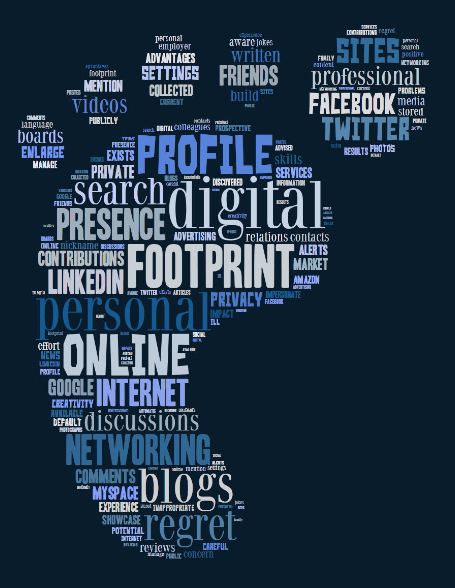
Whether we care to realize it or not, everything we do on the internet contributes to our own digital footprint, or digital dossier. A digital footprint is the accumulation of all the digital tracks a person leaves behind, and it can start before you are even born (Digitalnatives, 2008). The video "Youth and media: Digital dossier" by Digitalnatives (2008) provides a great example of how a digital footprint is formed. According to the video, a digital footprint begins with sonogram picture being posted to a social media site for friends and family to view and comment on. Once the baby is born, it is given a barcode bracelet, pictures of it are uploaded and sent via text message, and friends post more photos on social media sites. When the child is old enough, they may begin registering to websites such as Facebook and Amazon that ask for and permanently store personal information. As this baby grows into an adult, they are monitored on surveillance cameras, tracked by GPS's in cell phones, and kept tabs on by Google. This person's identity was made "before they even began to shape it" (Digitalnatives, 2008).
I think my own digital footprint truly began when I created my first America Online account when I was around 10 years old, in the year 2000. This was the first time I provided my personal information on the internet. Since then, I have submitted credit card information, photos, and many other pieces of information over the internet. My digital footprint began when I was relatively young, before I understood what digital citizenship really was. As a high school student, I never considered how my Facebook page could impact my chances of getting into college. Now social media sites are examined frequently to scan candidates for college applications as well as professional job opportunities. For the rest of my life, I need to be mindful of what I post on the internet to protect my digital footprint.
As an educator, I must now educate 21st century students on their own digital footprints and how to act as a digital citizen. Digital citizenship is comprised of all the norms of appropriate, responsible behavior through the use of technology (Module two, n.d.). Teachers are responsible for discussing appropriate digital citizenship with students prior to having them use the internet. They must also teach students how to protect their own digital footprints.
When I asked my 3rd, 4th, and 5th grade students when the first time they used the internet was, they could not remember! This led me to conclude that digital citizenship awareness should begin as early as kindergarten. Any students who accesses the internet should be taught about what it is and how it works. Teachers should not be afraid of digital citizenship. Instead, teachers should make the most of all that technology has to offer. Lessons should involve students in student-centered learning experiences using Web 2.0 tools, blogs, wikis, and other software. These kinds of experiences can enrich the learning experience and promote understanding. Teachers should monitor student internet access and ensure that students do not "cross the line" (Lindsay & Davis, 2012). In addition, they must have a pan for when a student does encounter disruptive material (Lindsay & Davis, 2012).
Effective educators must use 21st century technology to promote student learning. With regards to internet access, educators should engage students in topics that will create positive learning environments by engaging students in learning. One way to engage students is by allowing them to customize and personalize their digital accounts (Lindsay & Davis, 2012). Today's teachers should help students build positive digital footprints while still protecting their privacy and enhancing their learning experiences.
Resources:
Digitalnatives. (Producer). (2008).
Youth and media: Digital dossier [Web Video].Retrieved from
https://www.youtube.com/watch?feature=player_embedded&v=79IYZVYIVLA
Lindsay, J. & Davis, V. (2012,
August 07). Navigating the digital rapids. ISTE Learning and
Module two: Digital
citizenship (n.d.). Retrieved April 8, 2014 from https://bb.snhu.edu/
